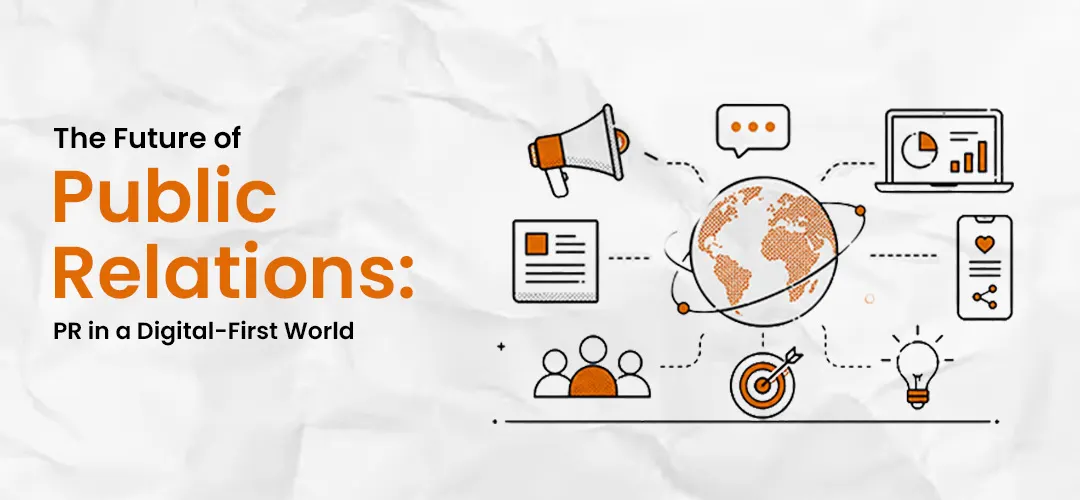
The way people discover, consume, and verify information has changed. Brands today communicate across news platforms, social media, search engines, online communities, and digital publications. Traditional corporate messaging alone is no longer enough to build visibility or trust. Modern Public Relations is about building credibility, maintaining relationships, managing reputation, and communicating clearly across these touchpoints. A strong Public Relations Strategy brings these efforts together with business goals, helping brands stay relevant and trusted in a digital-first world.
Public Relations is the practice of building and maintaining relationships between an organisation and its key audiences, including customers, employees, investors, journalists, partners, and communities. In simple terms, PR is about shaping how people understand a brand through communication, relationships, and reputation. In simple terms, PR is about what a brand says, how it communicates, and how people perceive it.
According to the Public Relations Society of America (PRSA), PR is “a strategic communication process that builds mutually beneficial relationships between organizations and their publics.” PRSA – All About Public Relations
1. Building a Modern PR Strategy
Managing a traditional corporate communications campaign can involve significant budgets, press outreach, and hours of manual follow-up. Scaling these activities without a clear plan can lead to team burnout and inconsistent messaging across different channels. Working with specialised communications talent can give businesses access to media relationships, monitoring tools, and experienced crisis support without having to build every capability internally.
A professional Public Relations framework helps businesses focus their communication efforts on the channels and audiences that matter most.
A practical approach starts with a few clear steps:
-
Define the business objective.
-
Identify the audiences and stakeholders that matter.
-
Find a story that is relevant to those audiences.
-
Identify the right journalists, publications, and platforms.
-
Prepare useful assets such as data, expert quotes, case studies, and visuals.
-
Plan outreach and communication channels.
-
Monitor the response and refine the approach.
A focused Public Relations Strategy connects these activities with wider business goals rather than treating PR as a series of disconnected media activities. Integrating Reputation Management helps teams monitor conversations, reviews, and emerging concerns. Developing proactive Crisis Communication plans gives leadership teams a clear process to follow when unexpected situations arise. Consistent Brand Communication also ensures that social copy, media statements, and corporate content feel connected.
Effective Media Relations then focuses on relevant journalists and publications instead of sending the same pitch to everyone.
2. Managing Your Online Reputation
Information about a brand now comes from many sources. A customer review, social media post, news article, creator recommendation, or online discussion can influence public perception. A defined Public Relations approach helps create a consistent corporate voice across these different touchpoints. Building a reliable communication framework helps businesses respond to public conversations with greater clarity instead of reacting to every comment or trend. Prioritising Reputation Management means monitoring negative reviews, recurring customer concerns, and changes in public sentiment before they become larger issues.
For example, if several customers raise the same complaint online, responding to each comment individually may not be enough. The business needs to understand the underlying issue, address it, and communicate the solution clearly.
According to the 2026 Edelman Trust Barometer, trust is increasingly influenced by people’s social and information environments, making credibility and relevance particularly important for organisations communicating with different audiences. Edelman Trust Barometer 2026
-
Deploying listening tools allows teams to identify important conversations early, but technology should support human judgement rather than replace it.
-
Implementing clear Crisis Communication processes helps teams respond consistently when an issue begins gaining attention.
-
Maintaining a steady publishing cadence across different channels also becomes easier when communication is planned around a central message rather than individual posts.
-
Optimizing Brand Communication creates a more consistent experience across customer touchpoints.
-
Nurturing organic distribution channels requires Media Relations that treats journalists and industry voices as long-term relationships rather than one-time contacts.
3. Creating Strong Brand Communication
In an era of brief digital attention spans, dropping a basic press release onto a wire service does not guarantee attention. Building visibility requires a clear story, a relevant angle, and information that audiences or journalists can actually use.
-
Deploying structured Public Relations campaigns can build a connected set of useful assets around one strong idea.
For example, instead of simply announcing:
“Company X has launched a new product.”
A stronger angle could be:
“How changing consumer behaviour is reshaping the category and what Company X is doing about it.”
The product remains part of the story, but it is now connected to a wider conversation.
-
Transitioning toward data-backed communication can help brands understand which stories and messages resonate with their audiences.
-
Designing a clear Public Relations Strategy ensures that media communication supports broader brand objectives instead of operating separately from them.
-
Customizing Reputation Management workflows helps businesses understand how their stories are being received and where concerns may be emerging.
-
Moving from reactive publishing to planned communication requires an understanding of real-time consumer behaviour and changing conversations.
-
Executing Crisis Communication protocols helps teams respond with clarity when unexpected questions or issues arise.
-
Partnering with relevant distribution networks can expand organic reach without relying entirely on paid promotion.
-
Building stronger Brand Communication removes inconsistency between internal messaging, social content, media interactions, and other public-facing communication.
-
Building an educational platform also creates opportunities for Media Relations by giving journalists useful data points, expert opinions, and supporting visuals.
-
Creating an open dialogue with audiences, journalists, and industry voices helps brands become part of relevant conversations rather than simply promoting themselves.
4. Preparing for a PR Crisis
Corporate messaging is not merely about promotion; it also plays an important role in building and protecting trust. Maximizing the value of communication requires useful, well-researched content that addresses real audience questions and concerns.
-
Outsourcing media execution to experienced communication teams can help manage story tracking, media outreach, and coverage monitoring.
-
Committing to structured Public Relations activities ensures that creative content and media outreach work together.
-
Redesigning organisational response processes around an agile communication framework helps teams address emerging issues before they grow.
-
Monitoring real-time community feedback forms an important part of modern Reputation Management across social platforms, review sites, and digital communities.
-
Establishing clear Crisis Communication processes helps protect stakeholder confidence when unexpected issues occur.
-
Integrating Brand Communication across digital channels creates a consistent experience for customers and other stakeholders.
-
Relying on relevant media networks helps reduce wasted outreach by focusing pitches on journalists and publications that are genuinely relevant to the story.
-
Scaling corporate reach through effective Media Relations requires understanding journalists by their areas of interest, previous coverage, and audience.
-
Creating a smooth communication journey helps address customer doubts before they become barriers to engagement.
-
Setting a consistent framework for tracking coverage, sentiment, engagement, and other relevant indicators provides a clearer picture of PR performance.
5. Building Strong Media Relationships
True market authority is built through consistent, meaningful interactions rather than accidental, one-off viral moments. Building long-term visibility requires a thoughtful approach to managing relationships with media networks and digital publications.
-
Embracing professional Public Relations systems allows marketing teams to move beyond guesswork and use performance data to understand what is working.
-
Adopting a clear operational framework helps teams review stories and communication based on audience response rather than assumptions.
-
Aligning campaign parameters with a focused Public Relations Strategy prevents overlapping messages and keeps communication consistent.
-
Restructuring corporate workflows with experienced communications teams can also help ensure that important public-facing content goes through appropriate reviews.
-
Eliminating message dilution requires consistency across different digital channels and communication formats.
-
Building a strong reputation relies on ongoing Reputation Management rather than occasional responses to negative conversations.
-
Formulating pre-approved statements allows leadership teams to respond more confidently during Crisis Communication situations.
-
Sustaining publishing and media outreach through changing market conditions requires a communication framework that can adapt over time.
-
Partnering Brand Communication with consumer and market insights can help businesses create messages that are more relevant to their audiences.
-
Relying on thoughtful, data-informed Media Relations can build a long-term media presence and establish company leaders as credible voices in their industries.
Conclusion
Mastering your communication infrastructure is no longer just an alternative marketing tactic; it is an important part of modern brand building and reputation management. Navigating a fragmented digital ecosystem requires a clear approach that connects communication with business objectives. Integrating a comprehensive Public Relations framework brings structure to media outreach, reputation management, crisis communication, and brand communication while allowing teams to make decisions based on audience insights rather than guesswork.
By standardizing a clear Public Relations Strategy, businesses can focus on relevant communication channels instead of trying to be everywhere. A data-driven Reputation Management programme helps teams understand how audiences are responding, while effective Crisis Communication processes prepare brands to respond when situations change.
Whether a brand is building awareness, launching a product, establishing thought leadership, or managing a difficult situation, strong Media Relations and consistent Brand Communication can help build credibility over time.
The goal is not to chase every digital trend. It is to build a brand that people recognise, trust, and have a reason to listen to.